AIA Billing for Electrical Contractors
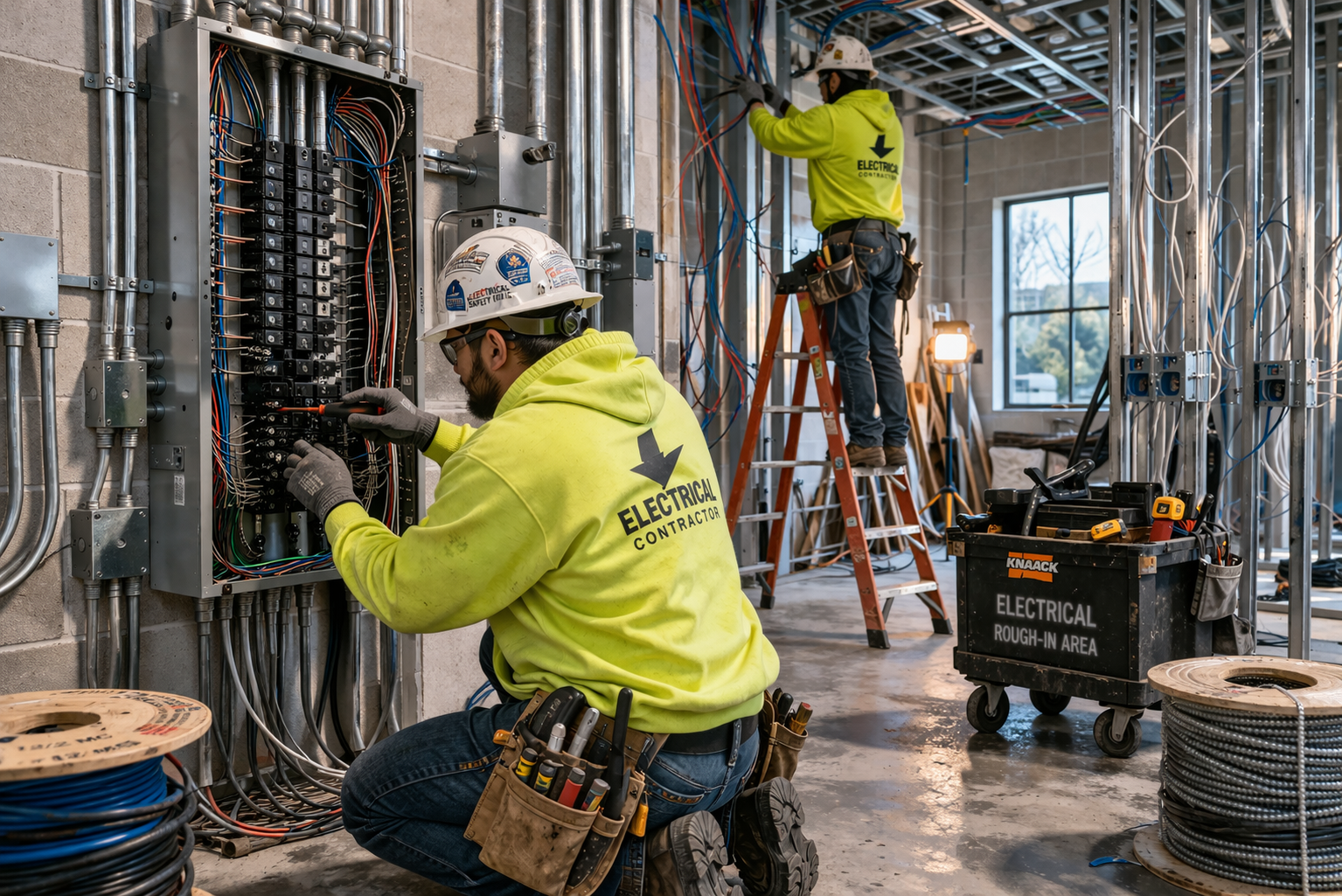
Electrical pay applications get kicked back when too many moving parts are being forced through spreadsheets, emails, field notes, and end-of-month cleanup.
The usual culprits are line-item drift, missed change orders, retainage inconsistencies, stored materials confusion, and totals that do not tie cleanly between the summary and the continuation detail.
Electrical billing rarely fails because electricians do not understand their work. It fails because electrical jobs create a ton of detail: fixtures, feeders, branch circuits, gear, trim, revisions, alternates, rough-in progress, material releases, and constant field changes. Then, at the end of the month, somebody has to turn all of that into a clean pay application that a reviewer can trust in two minutes.
Electrical contractor billing often combines rough-in progress, feeders, lighting packages, switchgear, stored fixtures, retainage, and change orders in the same pay application. That is why a focused AIA billing platform can be easier to manage than rebuilding spreadsheets every month.
This is where electrical billing starts to fracture. One number gets updated in one place but not another. A change order is approved in the field but not reflected in the SOV. Materials get billed this month and never properly roll into installed work later. The package still looks “close,” but the numbers look close enough — until someone checks them.
Why Electrical Billing Breaks Faster Than Most Trades
Plenty of trades deal with progress billing. Electrical contractors deal with progress billing plus a level of line-item detail that multiplies the chances of a mismatch.
- One job may have dozens or hundreds of detailed SOV lines
- Work is often spread across floors, rooms, systems, and phases
- Progress is rarely one clean percentage across the entire scope
- Equipment releases and stored materials may show up before installation catches up
- Field coordination and design revisions generate frequent scope changes
- Approved change orders can lag behind actual field execution
That means electrical billing is often not one simple “percent complete” story. It is a collection of mini-stories: panels in one area may be nearly complete, trim in another area may be lagging, fixtures on another floor may be stored but not installed, and one equipment package may be tied up in submittals or delivery timing.
Electrical Contractor Billing Examples That Create Review Questions
Electrical pay applications can look simple from the summary page, but the line-item detail often tells a more complicated story. Reviewers may need to understand whether rough-in, feeders, panels, lighting controls, fixtures, stored gear, and approved change orders all line up with the actual project status.
Switchgear arrives before installation
Gear may be purchased, delivered, and stored before it is installed. That creates material billing and documentation questions that need to be clear on the continuation sheet.
Fixtures progress differently by area
Lighting and device installation may be complete in one area, roughed in elsewhere, and blocked in another. One blended percent complete can create reviewer confusion.
Change orders affect contract value
Added circuits, owner-requested fixture changes, and equipment revisions need to stay separated from pending work until approved.
Retainage follows every billing period
Retainage errors may look small on one line, but they can throw off the current amount due, prior billing, and balance to finish.
Electrical Billing Is a Line-Item Problem, Not a Percentage Problem
Electrical contractors are often pushed into percent-complete billing, but the reality is that electrical work is tracked line-by-line, not as one blended scope.
That is what makes electrical billing so easy to throw out of alignment. One line moves. Another one does not. Panels may be further along than feeders. Feeders may be further along than fixtures. Rough-in may be ahead in one area while trim lags in another. If all of that gets flattened into broad percentages, the package may still total correctly while the detailed story starts breaking apart.
- Panels complete while branch work lags
- Feeders installed before terminations
- Fixtures staged long before final install
- One small change to one detailed line can ripple through the package
When electrical billing is forced into percentages instead of reflecting that structure, inconsistencies start immediately.
The Real Problem Is Line-Item Reconciliation Drift
A lot of electrical pay apps look acceptable when viewed in isolation. The real problems show up when the reviewer compares this month’s package to last month’s approved billing.
In electrical billing, the drift is often not dramatic at first. It starts with one line item moving, one material amount being adjusted, or one approved change not being reflected everywhere it should be. Then those small differences start multiplying across the package.
That is where drift shows up:
- This month’s “previously billed” values do not match last month’s “to date” values
- Stored materials were billed last month but never properly moved into installed work
- Retainage was handled one way on the prior app and differently on the current one
- Approved change orders changed the contract sum, but the SOV did not fully catch up
- A field revision changed billing reality, but the official backup did not move with it
Electrical contractors feel this pain because they often have too many details to reconcile manually and too many people touching the process: PMs, accounting, field leaders, estimators, project engineers, and sometimes the GC’s own review team.
- Does the electrical SOV match the live contract value?
- Do the G702-style summary totals match the G703-style continuation detail?
- Do prior billed amounts match the last approved period?
- Are stored materials real, documented, and clearly tied to specific line items?
- Do approved change orders show up everywhere they should?
What Makes Electrical Pay Apps Feel Risky to Reviewers
Reviewers do not usually know your job the way you do. They are looking for whether the financial story is clean, consistent, and easy to verify. Electrical packages can make that difficult because the detail level is high and the path from field progress to billing can get messy fast.
- Large numbers of small lines make misalignment harder to spot and easier to create
- Change orders may be discussed in meetings long before they are reflected in billing documents
- Equipment and materials may be billed before installation makes the progress feel obvious
- Different phases of work can create “why is this line ahead of that line?” questions
- Spreadsheet edits make it easy to fix one total while quietly breaking another
That is why electrical billing needs more than a form. It needs a workflow that keeps the package internally consistent every month.
Common Electrical Billing Mistakes That Trigger Kickbacks
Electrical pay apps rarely fail because of one big mistake. They fail because a large number of detailed line items stop telling a consistent story when viewed together.
1. Rough-in, feeders, and fixtures are not progressing together
One of the most common issues in electrical billing is misalignment between different types of work. Rough-in may be far along, feeders may be partially complete, and fixtures may not be installed yet. If those phases are billed inconsistently, the overall progress feels uneven and hard to trust.
2. Equipment and gear timing creates confusion
Panels, switchgear, and other major electrical components may be delivered, staged, or partially installed at different times. If billing does not clearly separate what is installed versus what is still material, reviewers start questioning the numbers.
3. Too many small line items create hidden inconsistencies
Electrical SOVs often have dozens or hundreds of lines. That level of detail is necessary, but it also makes it easier for small mismatches to slip in. One line gets updated, another does not, and the totals still look close enough — until a reviewer looks deeper.
4. Area-by-area progress is forced into one blended percentage
Electrical work rarely progresses evenly across a project. One floor or zone may be nearly complete, while another is just starting. If that gets compressed into a single percentage per line, the billing loses clarity and becomes harder to defend.
5. Small manual fixes break the larger billing structure
Electrical billing often involves last-minute adjustments to “make the numbers work.” The problem is that fixing one line item can quietly break the relationship between prior billing, current billing, and total completed to date.
A Real Electrical Billing Scenario
Say you are billing a mid-size commercial build-out. Rough-in is substantially complete in several areas. Lighting packages are partially delivered. Panels are in at one location but behind in another. Some branch circuit work is farther along than the fixture lines suggest. Meanwhile, two field-driven changes were priced, one was approved, and one is still floating in email.
Now the billing month ends. Someone has to turn all of that into:
- a current contract value that is correct,
- an SOV that reflects the approved scope,
- line-item progress that makes sense,
- stored materials that are supported,
- retainage that is applied consistently, and
- a summary that ties perfectly to the detail.
That is where the spreadsheet pain begins. Somebody updates fixture completion percentages. Somebody else adjusts material billing. Accounting fixes a total. The PM updates a prior number. The package looks mostly right, but the numbers are now telling slightly different stories.
Electrical Change Orders Create Billing Chaos Fast
Electrical contractors are especially vulnerable to change order billing issues because scope shifts constantly: owner requests, coordination conflicts, field conditions, design clarifications, value engineering, and rework caused by other trades.
The trouble is not that change orders exist. The trouble is when they exist in only one place.
- Approved in principle, but not in the SOV
- Added to the contract sum, but not tied to line-item billing
- Tracked by the PM, but not by accounting
- Included in current progress, but missing from backup
Electrical billing gets fragile when the field reality, the signed CO paperwork, and the billing package stop matching each other. That is why approved change orders have to be reflected cleanly and consistently.
Stored Materials, Gear, and Equipment Releases
Electrical jobs often involve substantial material and equipment values before installation is complete. That can make stored materials an important cash flow tool, but only if the billing is clean and supported.
- Switchgear or panels may be procured well before final installation
- Fixtures and controls may arrive in phases
- Equipment may be stored on site or off site depending on the job
- Owners and GCs often want backup before approving those amounts
The biggest billing mistake here is not billing stored materials. It is billing them sloppily. If there is weak documentation, poor line-item alignment, or no clean transition into installed work later, the stored materials section becomes a source of distrust.
Electrical stored materials are different from many trades because a few high-value items can change the billing picture quickly. Panels, switchgear, lighting packages, and control-related materials may represent substantial value before installation is visibly complete. If those items are not documented clearly and tied tightly to the right line items, the package can feel inflated even when the billing is legitimate.
Retainage Gets Messy on Detailed Electrical Billing
Retainage sounds simple until you are applying it across a detailed electrical package with installed work, stored materials, partial completions, and shifting project requirements.
- Does retainage apply to stored materials on this job?
- Is retainage handled by line item or only at the summary level?
- Was the same logic used last month?
- Was there a partial release or contract-specific exception?
Small inconsistencies here do not just change one number. They echo through current billing, prior billed amounts, total completed and stored to date, and waiver support. That is why retainage errors are so good at creating “something feels off” reviewer reactions.
Electrical Billing Workflow Topics to Keep Straight
Electrical contractor billing usually touches several parts of the AIA-style pay application workflow at the same time. These topics are where line-item drift, reviewer questions, and billing delays often start.
Retainage tracking
Keep retained amounts consistent across rough-in, gear, fixture, and closeout billing.
What is retainage in construction?Material billing
Organize stored gear, fixtures, and backup documentation before the package reaches the reviewer.
How to bill stored materialsChange order workflow
Separate approved COs from pending electrical scope changes before they affect the contract value.
How to bill change ordersHow PayAppPro Helps Electrical Contractors Control Complex Billing
PayAppPro is not trying to simplify electrical billing into something it is not. Electrical pay apps are complex by nature. The goal is not fewer details. The goal is keeping all of those details aligned as they move month to month.
Electrical contractors are often managing dozens or hundreds of SOV lines, each moving at a slightly different pace. Panels in one area may be complete, branch circuits in another may be halfway, fixtures may be staged but not installed, and multiple change orders may be affecting different parts of the job at the same time.
- Keep large, detailed SOV structures organized so line-item progress does not drift between billing periods
- Maintain clean rollforward from prior billing so “previously billed” always matches what was actually approved
- Track change orders in a way that keeps contract value, SOV lines, and current billing aligned
- Separate installed work and stored materials more clearly to avoid confusion around equipment and fixture timing
- Reduce the risk of fixing one line item and unintentionally breaking totals elsewhere
- Keep the G702-style summary and G703-style continuation detail synchronized without manual tie-out work
Instead of constantly adjusting numbers to make the package “feel right,” you are working from a system where the numbers stay aligned as the job evolves.
Who This Is For
This page is especially relevant if you are an electrical:
- subcontractor billing monthly on commercial or industrial work,
- project manager tired of spreadsheet cleanup at billing time,
- accounting team member trying to reconcile detailed contractor billing,
- operations leader who wants a more repeatable pay app workflow, or
- estimator / PM team trying to keep change orders and billing aligned.
If your electrical billing process currently depends on disconnected spreadsheets, email approvals, and somebody “being careful,” there is a good chance you are carrying more risk and rework than you need to.
Recommended Next Steps for Electrical Contractors
Review retainage tracking
Keep retained amounts aligned across detailed electrical line items.
Retainage in constructionDocument stored materials
Make switchgear, fixtures, and other stored materials easier to review.
Stored materials billingControl electrical change orders
Separate approved work from pending COs before billing.
Change order billing workflowMove beyond spreadsheets
Use PayAppPro to keep electrical billing continuity cleaner.
AIA billing softwareFAQ: Electrical Contractors and AIA Billing
Electrical pay apps often get rejected because detailed SOV lines, approved change orders, retainage, stored materials, and prior billed totals do not tie out cleanly across the package.
Because many detailed line items move at different speeds across different parts of the job. One small change to rough-in, feeders, fixtures, or equipment timing can create mismatches throughout the package.
The SOV should reflect how the work is actually billed and reviewed month to month. If it is too vague or too fragmented to manage consistently, billing drift becomes much more likely.
Yes, when allowed by contract. Panels, switchgear, fixtures, and other electrical materials can be billed as stored materials if they are documented properly and tied clearly to Schedule of Values line items.
Because the detailed billing story is not lining up across prior billing, current progress, stored materials, change orders, and summary totals. The work may be progressing normally, but the package does not fully show that.
A Cleaner Billing System for Electrical Subcontractors
Electrical contractors do not need more spreadsheet tabs. They need a subcontractor billing workflow that keeps SOV line items, stored materials, retainage, approved change orders, and prior billing history easier to review.
PayAppPro helps electrical contractors create cleaner AIA-style billing packages with construction billing software. If your accounting team also works in QuickBooks Online, review the QuickBooks Online integration for AIA billing.
Stop Fighting Line-Item Drift in Electrical Pay Apps
If your current process depends on manual tie-outs, copied formulas, and last-minute revisions, PayAppPro gives you a more repeatable way to create AIA-style pay application packages.
Also useful: pay app errors guide, change orders guide, retainage guide, and industry billing pages.